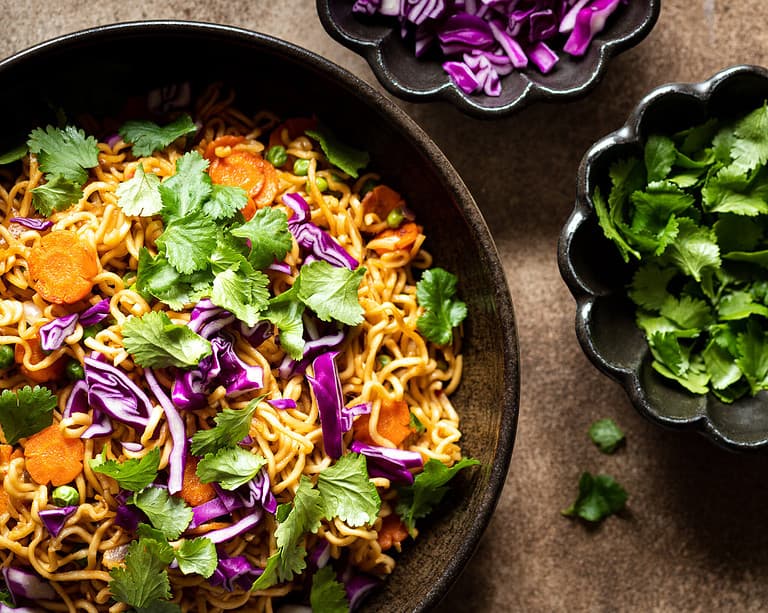
This easy bami goreng style noodle recipe is ready in minutes and great as a quick vegan fried noodle dish. The combination of ketjap manis, the sweet dark Indonesian soy sauce, mango chutney and sambal oelek, the Indonesian chili paste makes for a delicious umami flavor. It’s also good cold from the fridge, perfect as a work lunch.
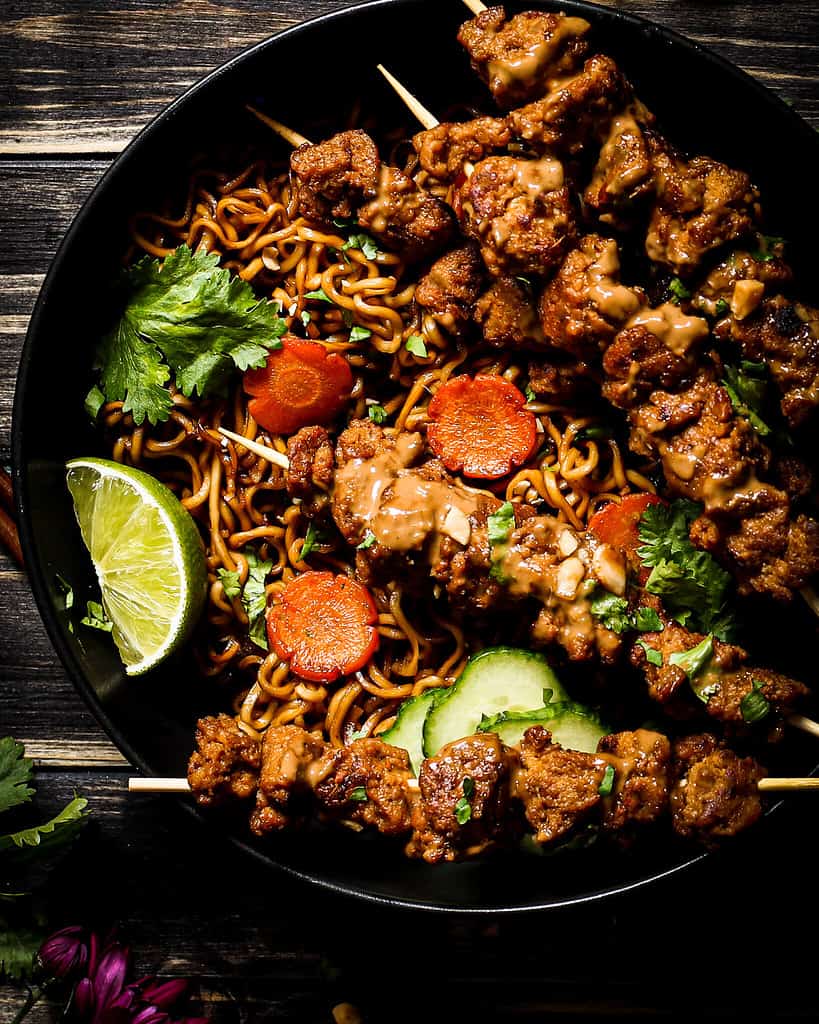
It is of course a perfect side for soy satay or seitan satay with spicy peanut sauce!
What do you need for the easy bami goreng?
Noodles
Use thin Asian wheat noodles, sometimes labeled mie or bami noodles. Make sure to pick an egg-free variety, it’s usually noted on the packaging. If you need gluten-free, rice noodles work too, though the dish then leans more toward bihun goreng, still delicious either way.
Ketjap manis
This is the sweet Indonesian soy sauce that gives the dish its dark color and caramel-like flavor. You’ll find it in the Asian foods aisle of larger supermarkets or at an Asian grocery store. If you need gluten-free, check the label, as ketjap manis is usually made from fermented soy sauce containing wheat, gluten-free versions do exist though.
Sambal oelek
This fiery Indonesian chili paste made from pureed chilies brings the heat. Adjust the amount to your own spice tolerance. Most brands are fully vegan, just worth checking the label on some, as a few contain fish sauce.
Mango chutney
This isn’t a traditional bami goreng ingredient, it’s my own fusion twist: the fruity sweetness pairs wonderfully with the heat of the sambal oelek and the umami of the ketjap manis in my easy bami goreng. You’ll find ready-made mango chutney in the Asian foods aisle or with the chutneys and jams at the supermarket.
What else goes well with my easy Bami Goreng?
You can of course add other veggies like snap peas, white cabbage, leek, bok choi, bean sprouts, bell peppers etc. mushrooms and meat replacement products also work well.
Easy Bami Goreng style noodles
Recommended Equipment
Ingredients
- 250 g egg-free mie noodles
- 2 tablespoons soy sauce
- 2 tablespoons ketjap manis
- 1 tablespoon mango chutney
- 1/2-1 teaspoon sambal oelek
- 1 small onion minced
- 1 carrot sliced
- 1 garlic clove minced
- 1-2 tablespoons frozen peas
- handful of fresh red cabbage chopped
- cilantro
Instructions
- First, gather all your ingredients and prepare them in the right amounts. That makes it so much easier and more fun and you're less likely to forget anything.
- Heat water mit 1 teaspoon of salt for the noodles.
- Combine soy sauce, ketjap manis, mango chutney and sambal oelek and mix well, then set aside.
- Put noodles in boiling water.
- Sauté onions and carrots in plant oil in a pan for about 3 minutes, add peas and garlic and stir well.
- Drain noodles and combine with sauce, then add to pan and stir.
- Stir-fry a little for a few minutes, you might want to add a little more soy sauce to taste.
- Serve with red cabbage and cilantro.
Nutrition
FAQ
Is this the same as mie goreng?
They’re closely related, but not identical. Mie goreng usually refers more broadly to Indonesian fried noodles in general, while bami goreng specifically uses Chinese-style wheat noodles (mie/bami) as the base. In practice, many recipes use the names interchangeably.
Is sambal oelek vegan?
Yes, classic sambal oelek is just chilies, salt, and sometimes a bit of vinegar or sugar, completely plant-based. Just double-check the label, since some brands add fish sauce or shrimp paste.
Is ketjap manis gluten-free?
It depends on the brand. Ketjap manis is usually made from fermented soy sauce, which can contain wheat. Gluten-free versions do exist, so check the label if that matters to you.
Is traditional bami goreng vegetarian?
It ususally contains chicken or shrimp along with egg, but my easy bami goreng is of course vegan.
If you love quick noodle dishes, check out these 5 quick and easy noodle recipes.