
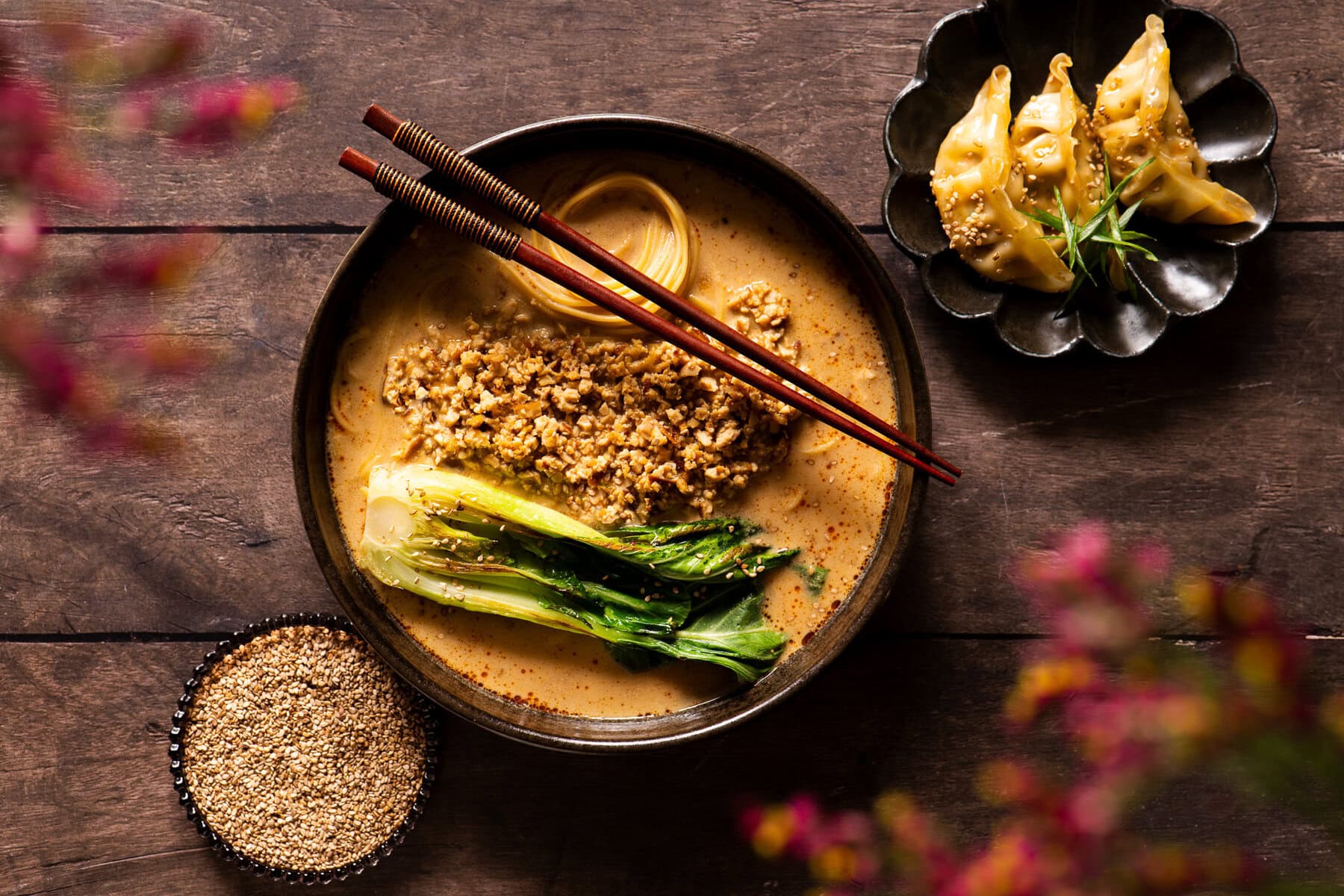
My vegan tantan soup is one of my first and still most popular recipes, and it was long overdue for an update! I actually don’t like spring onions at all, so they’ve been unceremoniously kicked out of the recipe. Of course, you can sprinkle some on top if you like, but they haunt me all day long. More importantly, the recipe was unnecessarily complicated, and that’s now been fixed.
Where did I get the inspiration for this vegan tantan soup?
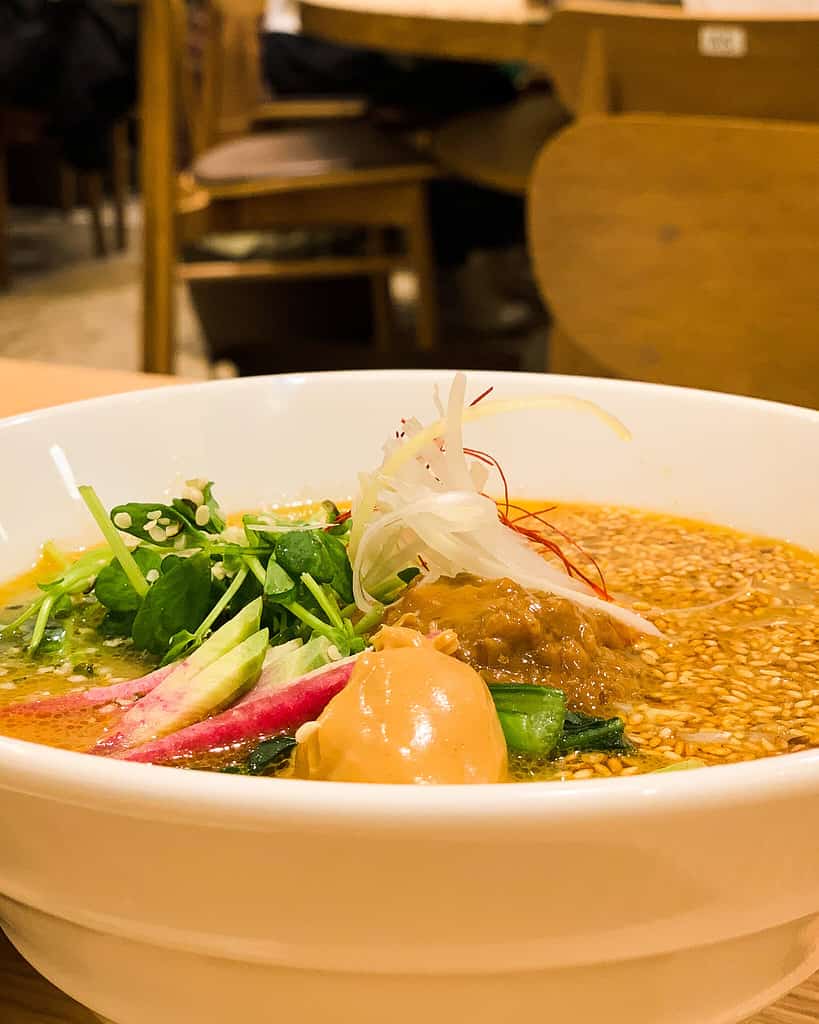
At Tokyo’s main train station, there’s a vegan ramen restaurant called T’s Tantan. They serve a Japanese tantan soup that’s so good, I ride the train halfway across Tokyo, walk forever through that absurdly huge station, and even buy a train ticket for a train I don’t actually take. Just for this soup. And every single time, this delicious, slightly spicy, vegan sesame noodle soup with chili oil is worth all the effort.
Is this recipe for tantan soup authentic?
It’s as authentic as I could possibly make it, trying to recreate the vegan tantan soup I’ve been eating again and again in Tokyo since I discovered the restaurant in 2012. Luckily, back then the ingredients were drawn on the wall inside the restaurant, so I had a starting point for creating a recipe that’s very similar to the one at T’s.
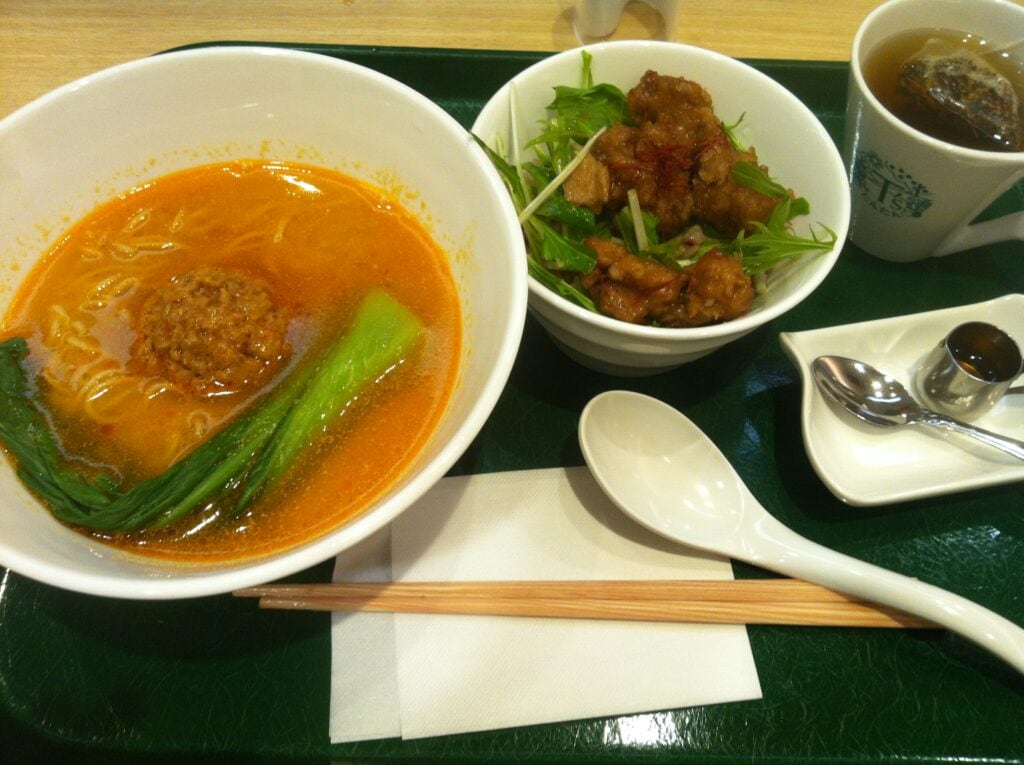
Since then, the restaurant has been renovated, opened several new locations, and added more soups and other dishes to the menu. The Golden Sesame Tantan Soup also looks very different now, but the pretty watermelon radish they use isn’t available in Berlin, so I stuck with pak choi. Sorry for the bad 2014 photo, it doesn’t do the delicious soup justice.
What’s the difference between tantanmen and dandan noodles?
Tantanmen is the Japanese take on Chinese dandan noodles from Sichuan cuisine. The Chinese version is famous for its intense heat and is traditionally served with a fiery sauce of chili oil, Sichuan pepper, sesame paste and minced meat. I once tried it at a vegan Sichuan restaurant in Hamburg and almost couldn’t finish it, it was so spicy.
Japanese tantanmen is milder and creamier: the broth is mellowed with tahini and soy milk, giving it that silky, nutty character. It can still be very spicy though, that’s entirely up to you and how much chili oil you add.
How to make Kombu Dashi
In Japan, soups are not usually made with vegetable broth, but I decided to use it since pretty much everyone has it at home. This isn’t very authentic, but I wanted to keep the recipe as simple as possible. You can also use vegan Japanese dashi. I know two ways of making it:
I took a highly recommended Shojin Ryori cooking class in Tokyo, where I learned, among other things, how to prepare Kombu Dashi. You need 500 ml (two cups) of water and one piece of kombu seaweed, approximately 5×10 cm. Clean the seaweed with a paper towel, then soak it in the water for at least 30 minutes, ideally overnight. Then slowly bring it to a simmer. Now remove the kombu, as it should not be boiled. You can now use the water for the Tantanmen. In that case, you also won’t need to add any vegetable broth powder.
Read more about Shojin Ryori and vegan cooking classes in Tokyo here.
In the Vegan Comfort Food cooking class in Kyoto, we made the broth a little differently: put 500 ml of water and one dried shiitake mushroom in the fridge overnight. The next morning, remove the mushroom and the broth is ready. I’ve also come across recipes where both are combined: the kombu seaweed is cooked in the shiitake broth.
Read more about the Vegan Comfort Food cooking class in Kyoto here.
What do you need to make vegan tantan soup?
- Hon Mirin is a sweet Japanese rice wine made from glutinous rice, rice malt (koji), and rice alcohol (shōchū), and fermented over several months. It has an alcohol content of about 13–14% and adds natural sweetness and depth of flavor to dishes. It’s used primarily for cooking, for example in teriyaki sauce. It’s higher quality than cheaper mirin substitutes, which often consist mainly of glucose syrup, but are often alcohol-free if you prefer that.
- Unsweetened Soy Milk I highly recommend it for flavour and texture, but you could replace it with oat milk.
- Shiro Miso is a mild miso paste that’s only aged for a short time. It contains beneficial bacteria that would be destroyed by cooking, so it’s added to the tantan soup only after it’s no longer boiling.
- Tahini is a paste made from ground sesame seeds. You could also grind sesame seeds yourself—I used to do that at first—but it’s a lot of work and doesn’t really taste any different.
- Ramen or Mie noodles are widely available nowadays. I like using spelt noodles that I buy at the organic store. Asian supermarkets also carry fresh ramen noodles in the refrigerated section, including colorful varieties made with purple sweet potatoes (a superfood from Okinawa) or other naturally colored ingredients. For the new tantan soup video and photos, I used fresh ramen noodles made with pumpkin. Rice noodles aren’t used for ramen soups.
- Smoked tofu is available in almost every supermarket now. I don’t recommend white tofu for this recipe, because it’s too soft. In a food processor, it turns into purée, not mince. That blends into the soup into a kind of mush—not what we want 🙂. If you can’t get smoked tofu, I’d recommend using soy granules instead: mix 75 g soy granules with 240 ml vegetable broth, let it sit for a few minutes, then fry with finely chopped ginger and garlic. That way you don’t need a food processor.
- Chili oil is wonderfully spicy and a beautiful deep orange. You can easily make it yourself, for example with this recipe.
- Pak choi is now grown in many places, including locally. For this tantan soup, I recommend mini or baby pak choi for space reasons. In this recipe, it’s pan-fried, placed in the soup, and drizzled with chili oil. It can be replaced by spinach, swiss chard and microgreens.
I’ve linked these ingredients in the recipe box below so you can take a look. You can find them in Asian grocery stores, many organic stores, and well-stocked supermarkets.
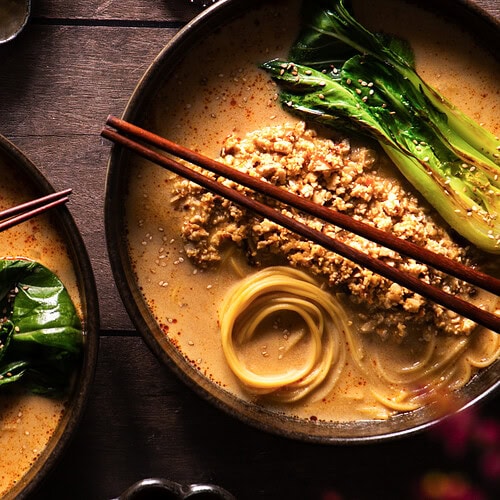
Vegan Japanese Tantan Soup (Tantanmen)
Recommended Equipment
Ingredients
For the "meat"
- 1 tablespoon ginger, roughly chopped
- 200 g smoked tofu, roughly chopped
- 1 tablespoon soy sauce
- 1 tablespoon hon mirin
- 1 teaspoon shiro miso or genmai miso paste
- 1 garlic clove, minced
for the soup:
- 500 ml water or vegan Dashi (see blogpost)
- 2 tablespoons tahini
- 2 tablespoons peanut butter
- 2 tablespoons hon mirin
- 1 tablespoon soy sauce
- 1 teaspoon veggie broth powder
- 1 teaspoon paprika powder
- 100 ml unsweetened soy milk
- 1 tablespoon shiro miso or genmai miso paste
for the other toppings:
- 200 g ramen noodles
- 2 mini bok choy washed, outer leaves removed, cut in halves
- 1 tablespoon sesame seeds
- 1 teaspoon chili oil
Instructions
- First, prepare all the ingredients and cooking utensils. Cooking is way more relaxed this way, and you won’t forget anything 🙂 This is especially important for this recipe, because the four components are prepared at the same time, so everything needs to be ready to go.
- Put the ginger and the smoked tofu into a food processor and pulse briefly. The tofu should not be too finely ground, it should still have some texture. If you don’t have a food processor, you can also grate the smoked tofu using a coarse cheese grater, in that case you want to chop the ginger finely.
- Heat a bit of vegetable oil in a large pan, then sauté the tofu-ginger mixture over medium to high heat for about three minutes, stirring occasionally. Meanwhile, mix 1 tablespoon soy sauce, 1 tablespoon Hon Mirin, and 1 teaspoon miso in a medium sized bowl. This will be the sauce for the tofu. A small whisk works best for this.
- Add the garlic to the pan with the tofu mixture, stir well, and reduce the heat. Continue to cook over low heat, stirring occasionally.
- Bring a medium saucepan of salted water to a boil for the noodles.
- Bring a small saucepan with 500 ml of water to a boil for the soup. Add 2 tablespoons tahini, 2 tablespoons peanut butter, 2 tablespoons Hon Mirin, 1 tablespoon soy sauce, 1 teaspoon vegetable broth powder, 1 teaspoon paprika and 100 ml soy milk. When the soup starts to boil, turn the heat off.
- Cook the noodles according to package instructions in the pot of boiling water.
- Add the tofu mixture to the medium bowl with the sauce, stir to combine, and set aside. Cover the bowl with a plate to keep it warm.
- Put the pan back on the stove, add a little more oil, and raise the heat slightly. Place the pak choi in the pan, cut-side down, and brown for about 2 minutes over medium to high heat.
- Stir the miso into the soup and stir thoroughly to dissolve the miso, using a whisk works best.
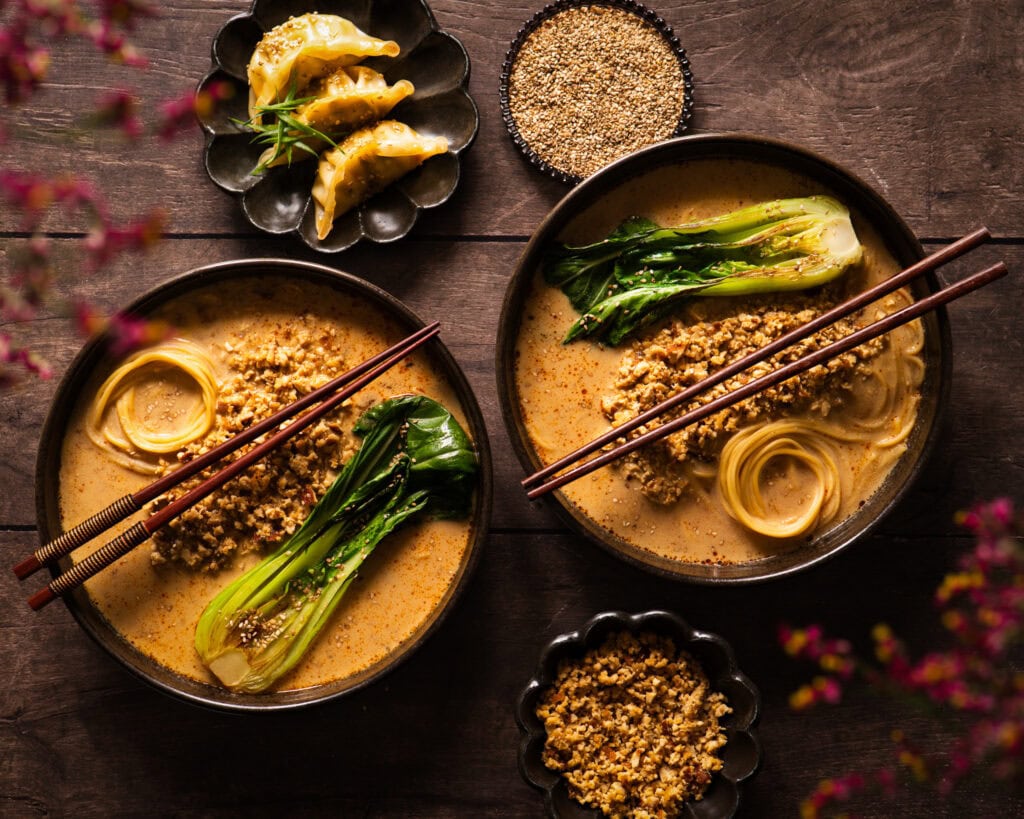
- Drain the noodles and divide them between two bowls. Pour the soup over the noodles (stir well one more time before serving), then add the tofu mixture and the pak choi. Garnish with chili oil and sesame seeds, and serve with chopsticks and a spoon.
Notes
Nutrition
What can I use instead of bok choy?
Fresh spinach, swiss chard or microgreens work well too. I’ve also used purslane before. Just add them to the finished soup, the hot steam will wilt the greens gently.
Can I use white tofu instead of smoked tofu?
I wouldn’t recommend it, white tofu is too soft and turns into mash in a food processor rather than mince. Smoked tofu gives the dish much better texture. If you can’t find smoked tofu, you can use textured soy protein instead: mix 75 g with 240 ml vegetable broth, let it sit for a few minutes, then fry with finely chopped ginger and garlic.
Is this tantan soup gluten-free?
You can make it gluten-free by using gluten-free ramen noodles and gluten-free soy sauce or tamari.
Can I make tantan soup ahead of time?
The sesame broth and the smoked tofu mince can both be prepared the day before and stored separately in the fridge. Just cook the noodles and veggies fresh when you’re ready to serve.
You love Japan or are planning to go there? You can check out my blogpost WHERE I ATE AS A VEGAN IN TOKYO.
You love smoked tofu? Then you might also like my 13 most delicious smoked tofu recipes.




Amazing! I’ve been trying to recreate this soup since visiting Japan and this recipe is perfect! Thank you.
Oh, so happy to hear that! Thanks 🙂
Omg!! I came back from Japan last month and today I was cravinnggggg T’s Golden Tan Tan and I was searching everywhere to try find one that sounded similar and then I came across your blog and you have the exact one I’m looking for ! 😍😍 Bless you I’m so stoked, trying it out today!!
Hi Jem, thank you so much! Hope you’ll enjoy it 🙂
So similar to ts tan tan in Tokyo station – great job and thanks so much for tweaking as you go we’ve been following along. Roasting/grilling the pak choi is a great idea, worked well.
Thank you so much! Glad you like the pak choi as much as I do 🙂
Oh my god this was the best ramen I ever made! Amazing! Thank you very much for the recipe!
Thank you so much! This made my day 😊