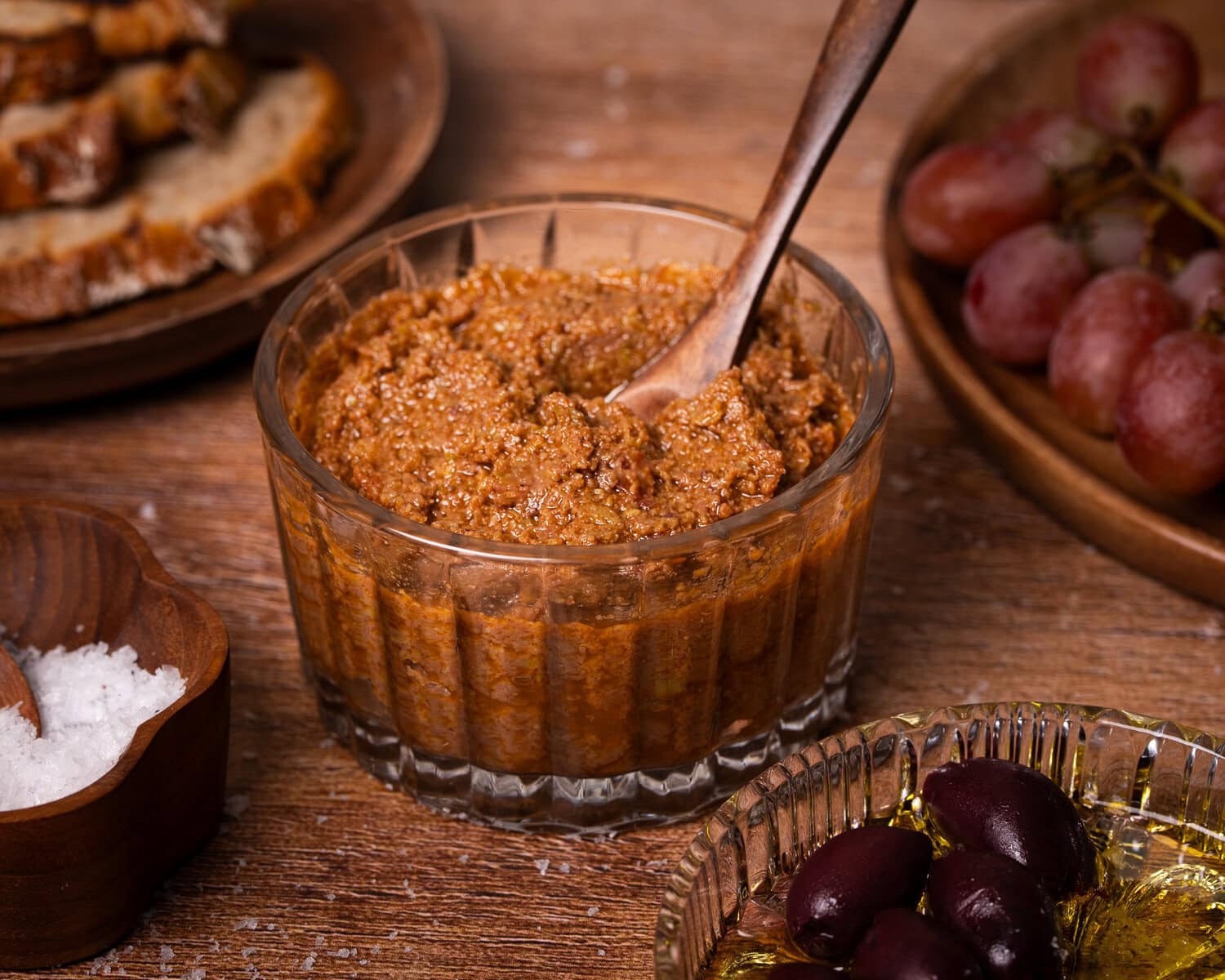
This vegan olive pesto is ready in 3 minutes and absolutely bursting with umami. Green and black olives, sun-dried tomatoes, capers, garlic, good olive oil and a little salt – that’s all you need. Perfect for your vegan buffet or vegan brunch!
Why this pesto is named after a famous pasta dish from Naples, and what that name actually means, you’ll find out further down.
The ingredients for your olive pesto
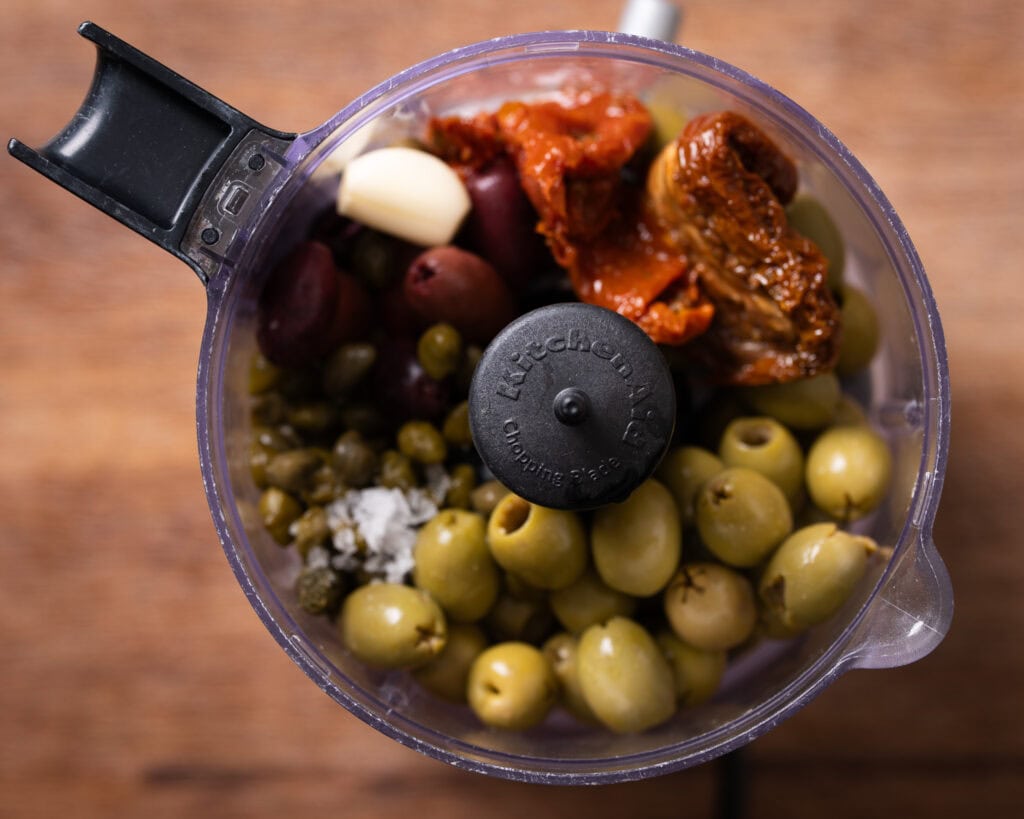
- Green olives: They’re the base and make up almost half of the pesto. Use pitted olives.
- Black or Kalamata olives: A small amount is enough for a mild, slightly fruity note and a lovely colour.
- Sun-dried tomatoes: Ideally the ones preserved in oil, as they’re softer and easier to blend. Dry ones work too, though.
- Capers: They add acidity and a savoury kick.
- Garlic: One small clove is enough – raw garlic is very present in pesto.
- Olive oil: A good extra virgin olive oil rounds off the flavour.
- Sea salt: Add it only at the very end and only if needed, as olives and capers are already salty.
How to make olive pesto at home
Making this olive pesto takes just 3 minutes. All you need is a small food processor or a hand blender.
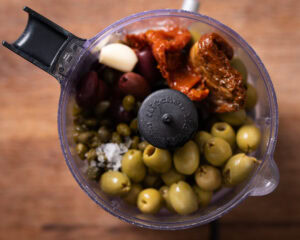
- Briefly drain the olives, sun-dried tomatoes and capers, and peel the garlic.
- Put everything in the food processor and blend until you have a spreadable, slightly chunky paste.
- Season with sea salt – done.
Tip: This recipe deliberately makes a small batch of about four servings. In a large food processor, the blades often just spin through such a small amount, so a mini chopper works much better, or a stick blender. Why I don’t recommend making a big batch to keep, you’ll find in the storage section.
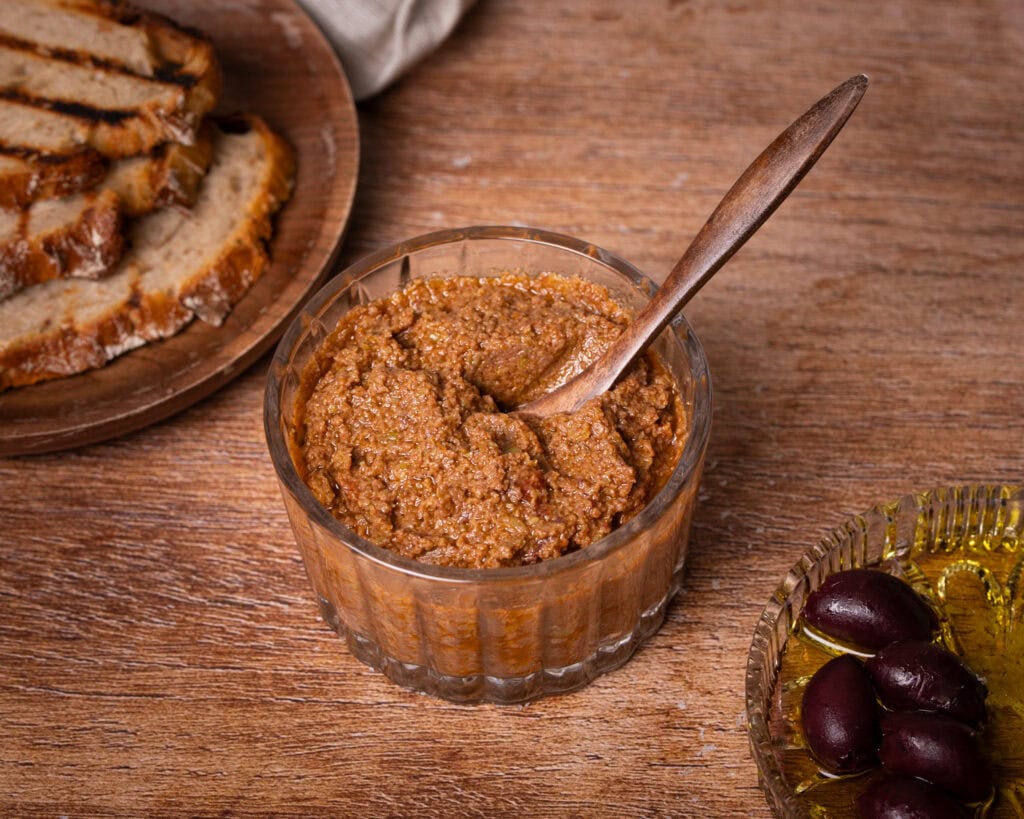
Pesto puttanesca: from pasta classic to pesto
The inspiration for this olive pesto is pasta puttanesca from Campania, the region around Naples. Its sauce is made with tomatoes, olives, capers, garlic and olive oil, traditionally with anchovies and often chilli. This pesto is essentially the concentrated, blended version, and of course, mine is vegan.
Why does this pesto puttanesca taste so good without anchovies?
In classic pasta puttanesca, anchovies provide the salty, savoury depth. In this vegan olive pesto, the other ingredients take over that job: sun-dried tomatoes are among the most glutamate-rich plant foods, because their flavour compounds concentrate as they dry. Cured olives and capers add an extra punch of salty, savoury flavour. The result is a pesto with plenty of umami – no fish needed. If you’d like it closer to the original, add a pinch of chilli flakes.
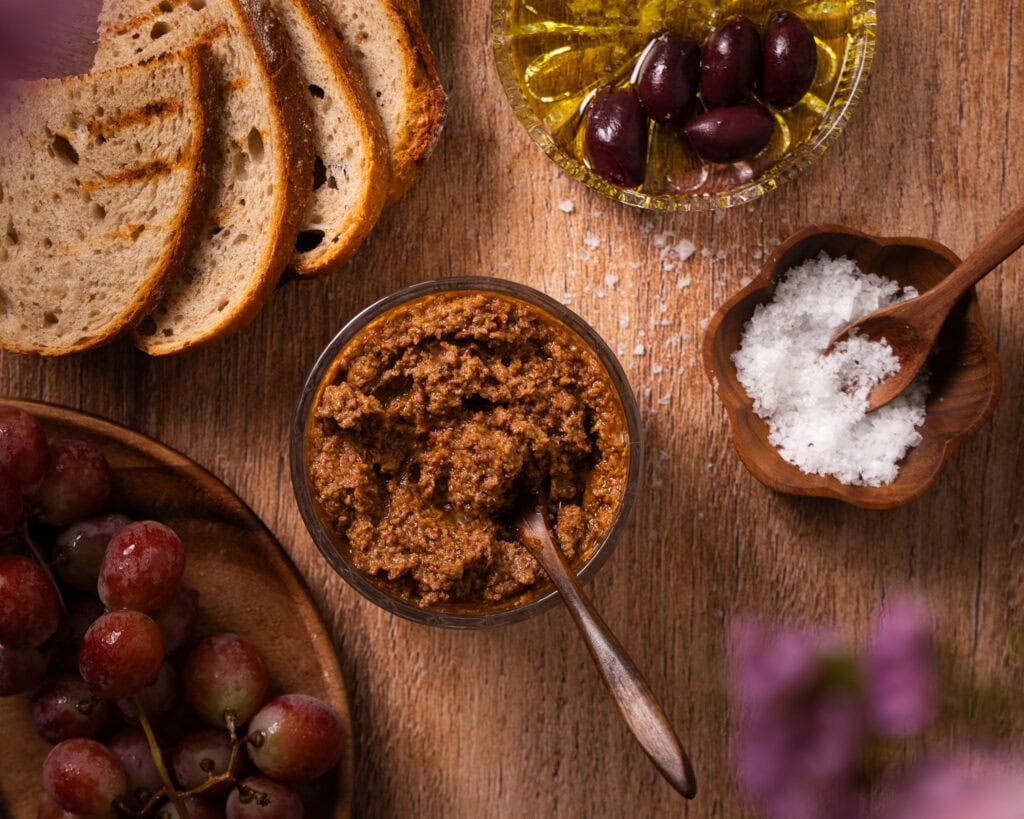
Fun fact: what does “puttanesca” mean?
In Italian “puttana” refers to a lady of the night – so “alla puttanesca” roughly means “in the style of the ladies of the night”.
Nobody knows for sure how the pasta got its name. According to one legend, women in the brothels of Naples cooked this quick dish from pantry staples between clients. Another says its enticing aroma was used to lure in customers.
Olive pesto recipes: how to use it
- Spread: Put a little vegan butter on fresh or toasted bread and spread a thin layer of pesto on top – my favourite.
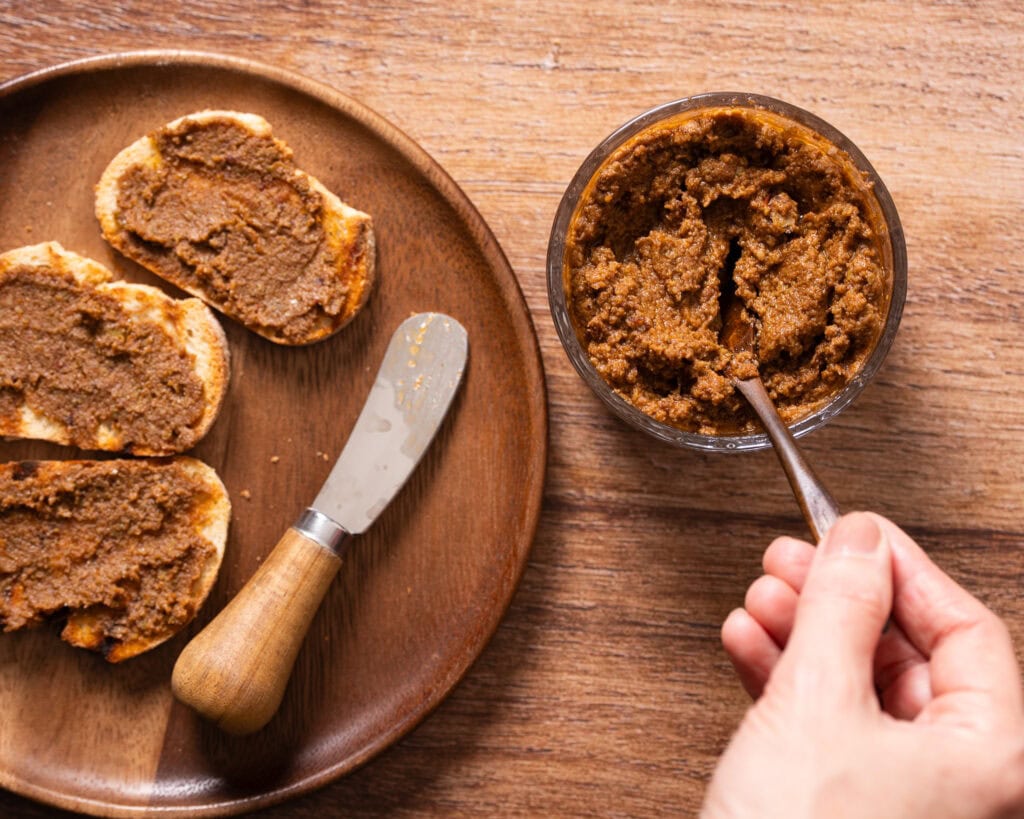
- Bruschetta puttanesca: Spread thinly on toasted bread and top with fresh diced tomatoes and basil.
- Sandwiches and wraps: As a flavourful spread, it goes perfectly with grilled vegetables or smoked tofu.
- Dip: Serve it as is with breadsticks, crackers or veggie sticks.
- Roasted vegetables: Spoon some over courgette, aubergine or potatoes straight out of the oven.
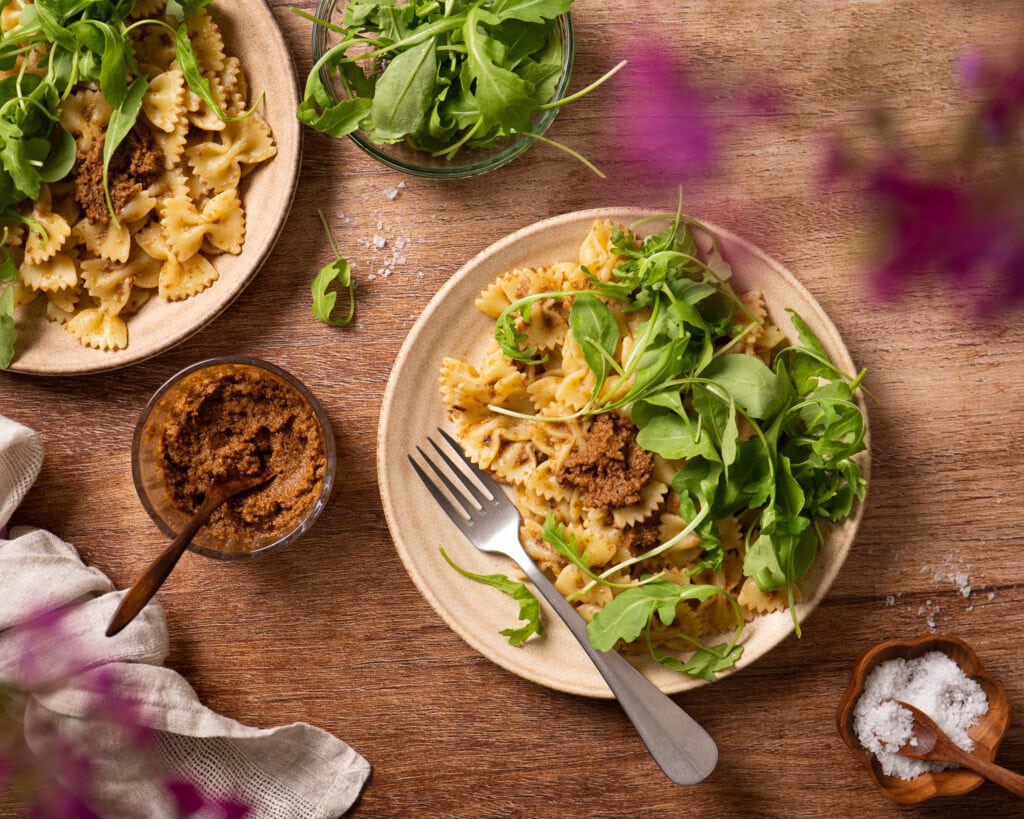
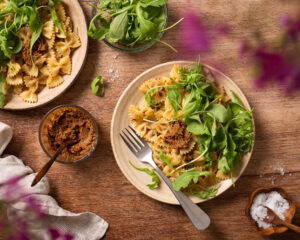
- Pasta: Stir the pesto into hot pasta – the fastest pasta puttanesca in the world.
How long does homemade olive pesto keep?
Keep homemade olive pesto in the fridge and use it up by the day after you make it at the latest. That’s the recommendation of the German Federal Institute for Risk Assessment (BfR) for all homemade preparations of vegetables, garlic or herbs in oil.
The reason is the bacterium Clostridium botulinum. Its spores are found on many plant foods and, under oil – in other words, without oxygen – they can produce a dangerous toxin. The tricky part: you can’t smell, see or taste it. Since this can’t be reliably ruled out in a home kitchen, this pesto isn’t meant to be stored long-term.
Store-bought pesto in a jar is heat-treated and preserved industrially, which is why it can sit on the shelf unrefrigerated.
If you do end up with leftovers, you can freeze them in portions right after making the pesto, for example in an ice cube tray.
Source: BfR – Questions and answers on botulism (15.06.2023, in German)
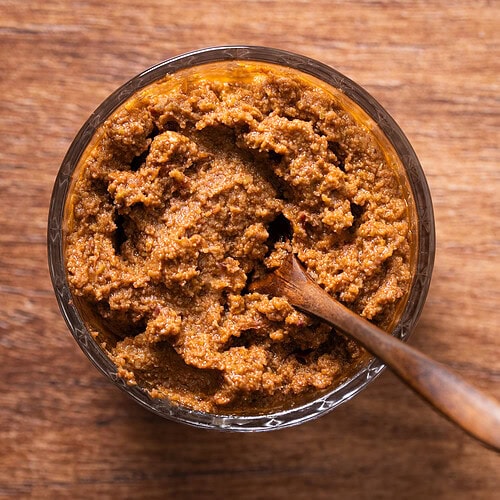
Olive Pesto – Vegan Pesto Puttanesca
Recommended Equipment
Ingredients
- 100 g green olives pitted, drained
- 4 tablespoons olive oil
- 40 g dried tomatoes drained
- 20 g Kalamata olives pitted, drained
- 15 g capers drained
- 1 garlic clove
- 1 pinch of sea salt
Instructions
- Blend everything into a pesto using a mini food processor or hand blender.
- Serve with bread, vegetables or pasta.
Nutrition
FAQ
Is olive pesto vegan?
If you make it with this recipe, yes. With store-bought olive pesto, it’s worth checking the ingredients: some varieties contain cheese, and a classic puttanesca pesto may contain anchovies.
Which olives work best?
Pitted green olives as the base, plus a small amount of black or Kalamata olives.
Can I freeze olive pesto?
Yes, ideally right after making it and in portions, for example in an ice cube tray. That way you’ll always have a little on hand for a tasty spread or a quick pasta.
What’s the difference between olive pesto and tapenade?
Tapenade comes from Provence and is traditionally made from black olives, capers and often anchovies. This olive pesto is Italian-inspired, based on green olives, and gets a fruity note from the sun-dried tomatoes.
More Italian-inspired recipes
Looking for more Italian-inspired recipes? Then take a look here: